Въведение
When children are between the ages of 3 and 5, they enter one of the most critical phases of growth. During this period, their brains are rapidly developing, and their ability to learn through experiences is at its peak. For them, play is not just entertainment—it is the primary way to explore, understand, and master the world around them.
Psychologists like Jean Piaget have emphasized that play is “the work of childhood.” Through play, children gain cognitive, social, emotional, and physical skills that prepare them for school and everyday life. This blog explores why learning through play is so vital for preschoolers, what kinds of play are most effective, and how parents and teachers can use daily play to build essential lifelong skills.
Why Play Matters for Children Aged 3–5
1. Cognitive Development
At this stage, children’s brains are like sponges. Play with puzzles, building blocks, or sorting games helps them learn concepts such as:
-
Colors, shapes, and sizes
-
Numbers and early math skills
-
Problem-solving and logical thinking
For example, completing a simple puzzle teaches patience and improves memory while also boosting spatial awareness.
2. Language Development
Role-play games like “playing house,” “pretend shopping,” or “doctor-patient” provide rich opportunities for children to:
-
Expand their vocabulary
-
Practice sentence formation
-
Improve listening and communication skills
The playful context makes language acquisition natural and enjoyable.
3. Social Development
Group games and cooperative play help children learn:
-
Taking turns
-
Sharing resources
-
Negotiating rules
-
Collaborating toward a goal
These skills prepare them for the structured environment of school and for building friendships.
4. Emotional Growth
Play is also an outlet for emotions. Children often express fears, frustrations, or excitement through role-play and storytelling. For example:
-
A child afraid of doctors may “become the doctor” in play, which reduces anxiety.
-
Acting out emotions teaches them empathy and self-regulation.
5. Physical Development
-
Gross motor skills: running, jumping, climbing, ball games
-
Fine motor skills: drawing, painting, cutting paper, or molding clay
Both types are crucial for independence and school readiness.
Types of Play That Boost Learning
Pretend Play (Imaginative Play)
Children act out roles such as teacher, chef, or firefighter. This kind of play:
-
Stimulates creativity and imagination
-
Builds empathy by seeing the world through others’ perspectives
-
Strengthens language and storytelling skills
Constructive Play
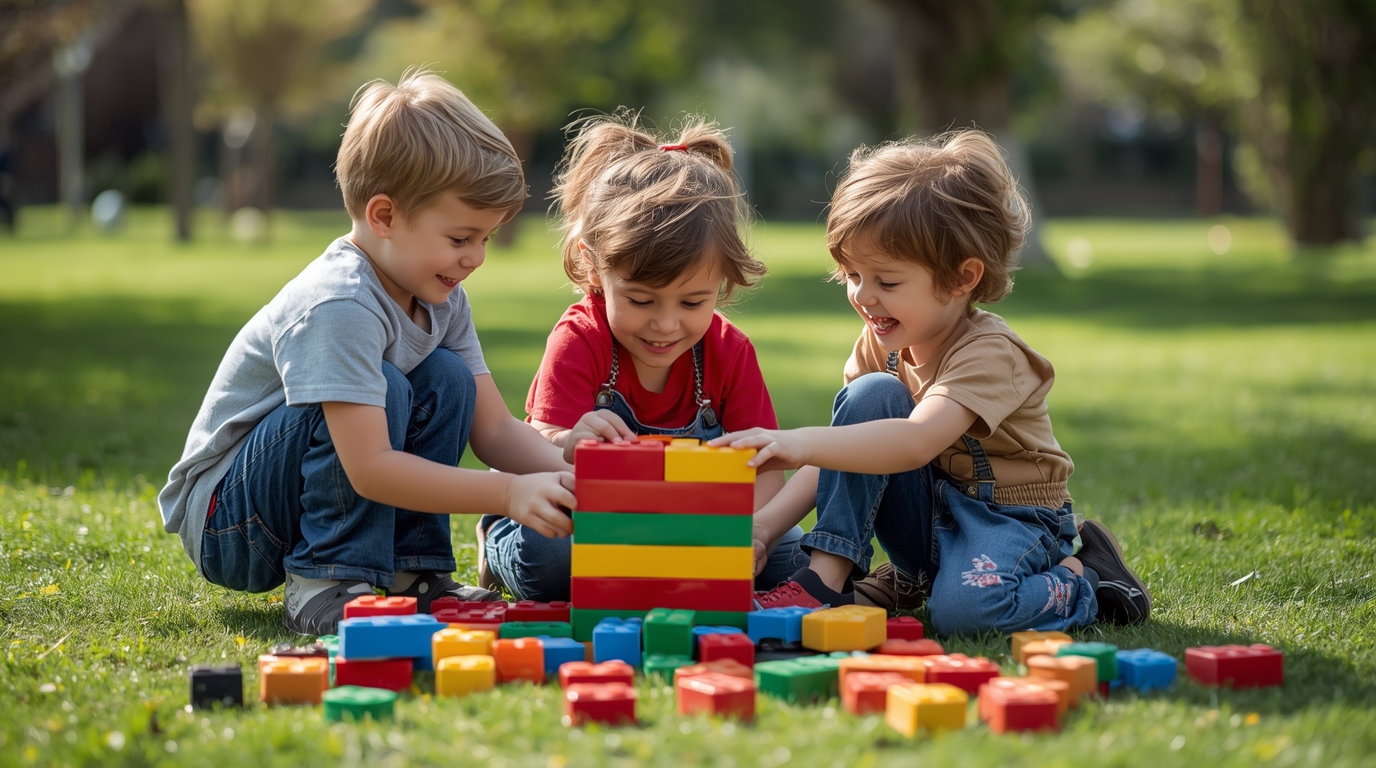
Activities such as building towers with blocks or assembling puzzles help children:
-
Focus and concentrate
-
Develop spatial reasoning
-
Learn problem-solving strategies
Physical Play
Outdoor and active games like hide-and-seek, hopscotch, or tag:
-
Improve coordination and strength
-
Teach teamwork and fairness
-
Reduce stress and encourage healthy habits
Artistic Play
Painting, drawing, coloring, and crafts encourage children to:
-
Express feelings nonverbally
-
Strengthen hand-eye coordination
-
Develop patience and creativity
Musical Play
Singing, dancing, or playing with simple instruments:
-
Improves rhythm and listening skills
-
Enhances memory and concentration
-
Builds joy and group connection
Daily Practical Strategies for Parents
Even in busy households, parents can turn everyday moments into learning opportunities:
-
Morning routine: Count steps while walking, name colors of clothes, or sing together.
-
Afternoon play: Art activities like finger painting or building with blocks.
-
Evening bonding: Storytelling, pretend play, or role-playing with puppets.
Quick Tips for Busy Parents
-
20 minutes of focused play is better than hours of distracted time.
-
Household chores can become play: sorting laundry by color, setting the table, or cooking pretend meals.
-
Praise and encouragement build motivation and confidence.
Ролята на учителите и възпитателите
In preschool and kindergarten, teachers can structure lessons around play rather than formal instruction. For example:
-
Teaching numbers by tossing a ball and counting aloud
-
Exploring colors through group painting
-
Practicing teamwork through building a large puzzle together
This play-based learning ensures that education feels natural and joyful rather than forced.
Barriers to Play-Based Learning
Despite its importance, modern challenges often limit children’s playtime:
-
Overuse of screens (TV, smartphones, tablets)
-
Limited living space in urban homes
-
Parents’ busy work schedules
-
Early pressure for academic achievement
Balancing technology use, creating safe play spaces, and prioritizing free play can help overcome these obstacles.
FAQs About Learning Through Play
Q1: How much playtime should 3–5-year-olds get daily?
At least 45 minutes of free play plus structured learning activities is ideal.
Q2: Can educational apps replace real play?
No. While some apps are useful, real-world play develops social, emotional, and physical skills that screens cannot provide.
Q3: Is play still important once formal schooling begins?
Yes. Even in school years, play enhances creativity, reduces stress, and improves problem-solving skills.
Q4: What if parents don’t have time for long play sessions?
Short, consistent moments of playful interaction—like storytelling before bed or sorting toys—can still make a big difference.
Заключение
For children aged 3–5, play is the foundation of learning. It develops their minds, bodies, emotions, and social skills in ways no formal lesson can fully replace. Parents and teachers who recognize the power of play give children the best possible start in life.
By dedicating just a little time each day to learning through play, we prepare children not only for school but also for creativity, resilience, and lifelong curiosity.