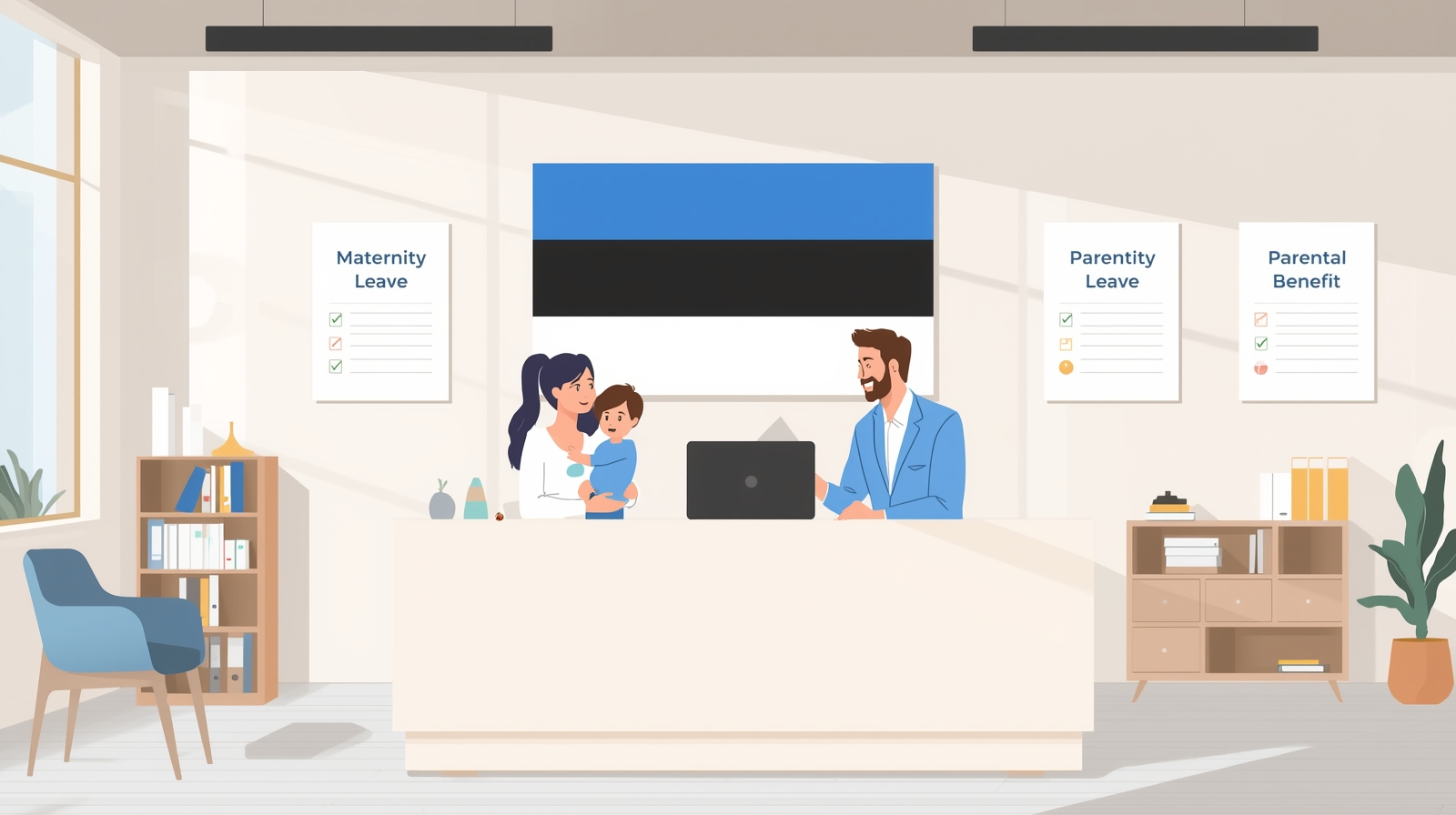
Parental Leave Information in Estonia
Introduction
Parental leave is one of the most significant policies that allow parents to take time off work to care for their children without losing financial security. Estonia is often recognized across Europe for its generous and flexible parental leave system. The country provides parents with various types of leave, including maternity leave, paternity leave, and parental leave, each designed to support families during the critical early years of a child’s life.
The system ensures that both mothers and fathers can balance their careers and family responsibilities. Parents are entitled to paid leave with state compensation, ensuring financial stability while focusing on childcare. Estonia’s approach is particularly inclusive, granting fathers a separate right to leave and encouraging shared caregiving responsibilities.
In addition, Estonia allows parents to split and combine their leave flexibly, making it possible to tailor the arrangement to a family’s individual needs. For many families, this policy helps achieve a healthier work-life balance and provides children with a nurturing start to life.
This guide explores the different types of parental leave available in Estonia, who qualifies, how payments are calculated, and practical examples to illustrate how the system works in everyday situations.
Types of Parental Leave
Maternity Leave
Maternity leave in Estonia is specifically designed for mothers before and after childbirth. It allows women to take time off work to prepare for delivery and recover afterwards.
- Duration: 140 calendar days
- Recommended to start 30–70 days before the expected due date
- Fully compensated through the Health Insurance Fund, based on the mother’s average income from the previous year
- The leave must be taken in one block, without interruption
For example, if a woman starts her maternity leave 60 days before her due date, she will still have 80 days left after giving birth. This ensures proper rest and bonding time with the newborn.
Source: https://www.haigekassa.ee/en/people/childbirth-and-health/benefits-related-childbirth
Paternity Leave
Estonia also provides fathers with paternity leave to encourage equal participation in childcare.
- Duration: 30 calendar days
- Can be taken during the period from 30 days before the due date until the child turns 3 years old
- Paid by the state, with compensation equal to the father’s average income
- Flexible usage: days can be used consecutively or in parts
For example, a father may choose to take two weeks immediately after the birth and the remaining two weeks later during the child’s first year, depending on family needs.
Source: https://sotsiaalkindlustusamet.ee/en/family-benefits-and-allowances/benefits-and-services-parental-leave
Parental Leave (Shared Leave)
After maternity and paternity leave, parents are entitled to parental leave, which can be shared between mother and father.
- Duration: Until the child turns 3 years old
- Paid parental benefit: up to 435 days in total for one child
- Compensation: 100% of the parent’s previous average salary, capped at a national limit set annually
- Flexibility: Either parent can use the leave, and they can alternate between themselves
For example, the mother may take parental leave for the first 8 months, then the father may take over for the next 6 months, while the mother returns to work. This flexibility allows both parents to contribute to childcare.
Source: https://sotsiaalkindlustusamet.ee/en/family-benefits-and-allowances/benefits-and-services-parental-leave
Childcare Leave Without Pay
In addition to paid leave, parents have the right to unpaid childcare leave until the child turns 3. While this period is not compensated, it ensures job protection and guarantees that the parent can return to their position after the leave ends.
- Duration: Until the child turns 3
- No state payment during this time
- Employer is obligated to keep the parent’s job or provide an equivalent position
This option is often used when one parent wishes to stay home longer than the paid leave allows.
Source: https://www.ti.ee/en/working-life/parental-leave
Payment and Compensation Rules
Payments during parental leave are calculated based on the parent’s average income from the previous year, reported to the Tax and Customs Board.
- Maternity leave: 100% of average salary (no cap applied)
- Paternity leave: 100% of average salary (subject to state limits)
- Parental leave: 100% of average salary, capped at three times the national average wage
- Minimum benefit: Parents who had no taxable income still receive a minimum parental benefit set by the government each year
For example, if a parent earned €1,500 per month on average in the previous year, they will receive the same amount during paid parental leave. However, if a parent earned €4,500, they may be capped according to the national maximum.
Source: https://sotsiaalkindlustusamet.ee/en/family-benefits-and-allowances/benefits-and-services-parental-benefit
Real-Life Example of Parental Leave Use
Anna and Mark, a couple living in Tallinn, are expecting their first child. Anna decides to start maternity leave 60 days before her due date. After the baby is born, she continues her leave and then transitions to parental leave for 6 months.
Mark takes 10 days of paternity leave immediately after the birth to help Anna recover. Later, when the baby is 8 months old, Mark takes an additional 20 days of paternity leave and then takes over full parental leave for 4 months, allowing Anna to return to work.
In total, their child benefits from continuous parental care while both parents share responsibilities, and both maintain career stability.
Comparison Table
| Type of Leave | Duration | Payment | Eligibility |
| Maternity leave | 140 days | 100% of average salary | Mothers |
| Paternity leave | 30 days (flexible use) | 100% of average salary | Fathers |
| Parental leave | Up to 435 days (shared) | 100% salary (capped) | Either parent |
| Childcare leave | Until child is 3 years old | Unpaid | Either parent |
Frequently Asked Questions (FAQ)
Who pays parental leave benefits in Estonia?
Payments are made by the Estonian Health Insurance Fund (maternity) and the Social Insurance Board (parental benefits).
Can parents take parental leave simultaneously?
Generally, only one parent at a time can use paid parental leave. However, unpaid leave options are available for both simultaneously.
What if I was unemployed before pregnancy?
Even if you had no taxable income, you are entitled to the minimum parental benefit determined annually.
Can foreign residents receive parental leave benefits?
Yes, as long as they are legally residing in Estonia, working, and registered with the Estonian Health Insurance Fund.
Does taking parental leave affect my pension?
No, the state contributes to your pension system during periods of paid parental leave, ensuring you do not lose pension years.
Are there flexible work options after parental leave?
Yes, many employers in Estonia offer part-time arrangements after parental leave, and state policies encourage work-life balance.
Conclusion
Estonia’s parental leave system is among the most supportive in Europe, offering parents a combination of generous paid leave and flexible options to suit their family’s needs. With 140 days of maternity leave, 30 days of paternity leave, and up to 435 days of shared parental leave with full salary compensation, families are well supported during the early stages of child-rearing.
This framework not only strengthens family bonds but also encourages fathers to take an active role in childcare, fostering gender equality in both work and home life. The option for unpaid childcare leave ensures parents can extend their time with children without losing job security.
Parents planning their leave should carefully consider the timing and division of benefits to maximize financial security and quality time with their children. Applying online through official government portals makes the process simple and accessible. By staying informed and taking advantage of these policies, families in Estonia can build a strong foundation for their child’s future.
Sources:
https://www.haigekassa.ee/en/people/childbirth-and-health/benefits-related-childbirth
https://sotsiaalkindlustusamet.ee/en/family-benefits-and-allowances/benefits-and-services-parental-leave
https://sotsiaalkindlustusamet.ee/en/family-benefits-and-allowances/benefits-and-services-parental-benefit
https://www.ti.ee/en/working-life/parental-leave
https://www.eesti.ee/en/